

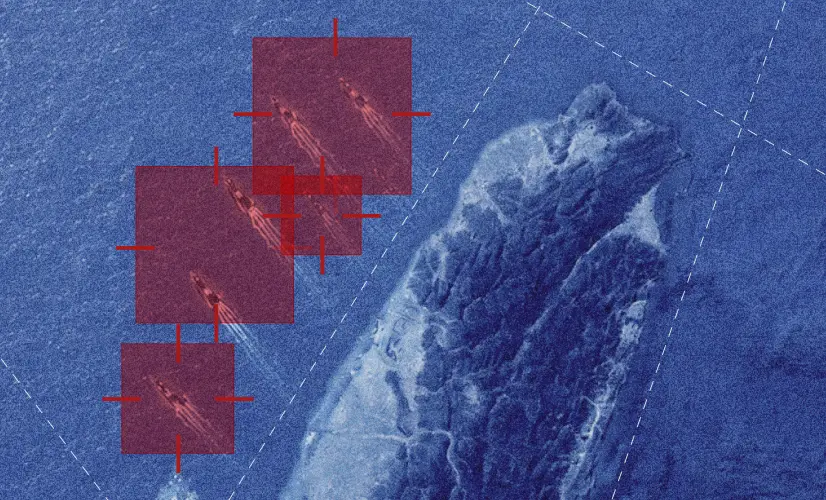
Ukraine’s fight against the Russian Black Sea Fleet has seen tremendous developments in the use of Unmanned Surface Vehicles (USVs), yielding valuable lessons for states facing outsized threats. As China increases its pressure across the Taiwan Strait, these lessons have significant utility for the island’s defense.
This study is the second in a series of reports produced by the Snake Island Institute on the future of naval warfare. Our first report, The Black Sea’s Asymmetric Blueprint (2025), analyzed Ukraine’s use of USVs to limit the Russian Black Sea Fleet’s freedom of action. This follow-on report applies those combat-derived lessons to a different strategic context, namely the Indo-Pacific and Taiwan’s possibility of replicating Ukraine’s success in fighting an asymmetric war against China. Drawing on open-source intelligence, wargaming models, and interviews with Ukrainian USV operators and manufacturers, it evaluates how unmanned systems can help address critical gaps in Taiwan's traditional defense posture. It details the tactical realities of drone warfare, from launch constraints to target prioritization.
In Taiwan's case, the value of USVs lies in their ability to close existing structural gaps in the island’s defense, imposed by the extreme time compression of operations, early fleet degradation, asymmetric force size, and geographic isolation. While they are not “silver bullets” nor a substitute for conventional naval forces, USVs represent a cost-effective force multiplier. Without crew sustainment requirements, and with significantly lower maintenance demands than crewed platforms, unmanned systems can be produced at scale for a fraction of the per-unit cost. This enables a defending navy to sustain combat power, maintain domain awareness, and preserve forward presence at costs conventional forces cannot match. However, to successfully implement a USV strategy, Taiwan must address critical, unresolved industrial and logistical challenges.
Rather than merely extrapolating Ukrainian tactics onto the Indo-Pacific, the report analyzes where these lessons translate cleanly, where they require adaptation, and where they do not apply at all. It explores the interplay between the harsh environmental conditions of the Strait, divergent USV design philosophies, and the immense challenge of sustaining an attritional campaign while cut off from global supply chains. It presents a realistic assessment of what is required to turn unmanned prototypes into a credible operational deterrent.
Key themes and insights include:
— Mass Matters More Than Perfection: Successfully overwhelming automated, layered defenses will require large numbers of platforms, forcing the adversary to choose between spending scarce, high-value interceptors or accepting losses against critical assets. Taiwan should expect high attrition rates for its USV fleet, with more than half of a drone wave potentially destroyed before reaching its target.
— Bad Weather is an Opportunity: The severe weather, heavy seas, and frequent fog of the Taiwan Strait serve as a natural concealment for USVs, turning what paralyzes manned amphibious operations into an operational advantage for drones.
— Leveraging USVs Across Conflict Phases: Rather than serving only as strike platforms, USVs can impose constant operational friction across the course of a conflict. The report examines how they could disrupt maritime blockades, harass invasion logistics, delay amphibious sustainment operations, and exploit the vulnerabilities of ships concentrated in ports and unloading zones.
— Divergent Design Philosophies: An analysis of Ukraine’s long-range platforms (MAGURA V5, Sea Baby) and Taiwan’s domestically developed models (Kuai Chi, Endeavor Manta), highlighting differing priorities in mobility, lethality, and survivability.
— Aligning Industrial and Logistical Requirements to Support the Strategy: The effectiveness of this strategy depends on Taiwan’s industrial and logistical capacity to sustain the tactical and operational demands of USVs. A credible USV strategy would require Taiwan to stockpile thousands of platforms and components, develop decentralized and hardened storage infrastructure, and maintain resilient command-and-control systems capable of operating under heavy electronic warfare and communications disruption.
Drawing directly from Ukraine’s asymmetric campaign against the Russian Navy, The Black Sea Blueprint for Taiwan argues that the effectiveness of unmanned maritime systems depends not only on technology, but on a state’s ability to sustain mass production, absorb attrition, and adapt operational concepts under real combat conditions.